Friday, April 02, 2010

Belatedly, the 2010 Whitney Biennial

About a month ago, I accompanied Steve Cannon to the Whitney Biennial. I took some pictures but my report was eclipsed by the next week's art fair glut. This was a different experience from the last Whitney event we attended, for several reasons. The Biennial is much higher profile and larger and affords the curators the opportunity to organize multiple floors as an architectural installation. It was very crowded. We ran into some absurd problems. I relish the uncomfortable and awkward, because it's more to talk about.
One absurd thing is that we bypassed the line around the block of guests with the same sort of invitations as ours by approaching the front doors and - I feel terrible having actually said "he can't wait in line, he's blind". It was completely ridiculous, but one of the staff recognized Steve and let us in. I count it as one of the many situations where it's easier to acquiesce to the entitled than stick to principles.
The first place everyone ended up was on the long coat-check line. Steve claimed he didn't want to check his coat so I had to figure ou how to get out of the line.


The Bruce High Quality Foundation is a collective with its own response-nnial. Their piece was an ancient ambulance with scenes from movies projected on the front window, narrated by a woman who spoke of their relationship with a personified America. Boring but it did have presence.

My favorite piece was a sculpture installation involving glasses of water and video cameras hanging in orange nets from a system of wires. The cameras fed live to projectors embedded in tables around the room, semi-randomly.


Tauba Auerbach makes large, very flat paintings of crumpled canvases. This was the highlight of the Art Materials Reflexivity Room.

After two floors Steve, who was still wearing two layers of coats, overheated and needed to sit down. I took him to the stairwell where we caused a serious fire code violation and had to ask security for a wheelchair. Most were okay but one oblivious security guy just told us not to block the stairs as he passed. So, thank you Whitney: not only did you allow the absurdity of a blind dude at a visual art opening, but you gave him a wheelchair.
I then parked him in a corner with a makeshift label on the wall and finished my tour of the 2-d-oriented floor, to report back.


Aurel Schmidt exemplifies what I might call hipster art - young Americans who tend to focus on detailed craftwork. Work like hers, colored drawings in which figures are assembled from junk objects, combine the generation's preoccupations with recycling and non-fractal scaling.

These concerns manifest best in the sculptures and installations Francesco Bonami and Gary Carrion-Murayari have selected this year. Other notable decisions are the decrease in artists from the last biennial, and the female majority. Viewing it at the opening meant that the crowd overwhelmed the work - or that the work was trying particularly hard for a stillness that resisted the party atmosphere. I definitely felt that the curators knew more what to look for in 3-D and virtual work than in 2-D, or were encouraging a "painting is dead, and really, we're trying to believe it isn't" attitude. I don't think that represents any general reality in art right now - but I prefer the post-historical approach, anyway.

Tuesday, March 23, 2010

Taking a Blind Man to See Marina Abramovic

The first day, March 10, of member previews of the Marina Abromovic retrospective at MoMA, Steve Cannon asked me to take him up there to say hello to her. He remembered interviewing her by email eight years ago when she spent 6 weeks living in three exposed, spartan rooms at Sean Kelly gallery for House with an Ocean View. In "The Artist Is Present", on MoMA's second floor, he understood she would be present, and therefore wanted to present himself to her and mention he'd interviewed her.
"The Artist Is Present" consists of Marina sitting at a table, for three months of MoMA open hours, in the middle of a large open space under massive lights from four corners. Museum attendees are invited to individually sit across from her. She does not speak. She barely emotes. She sometimes rests and shifts when she needs to.
When we got there, there was a line to sit with the artist. We didn't notice the line, and when the middle-aged tourist who had been placidly staring Marina down got up, I tried to guide Steve out there. Naturally the next person in line moved faster and we retreated. It would have been very curious to have heard and seen Steve trying to engage the Present Marina: the perfect communication of the blind with the mute.
The power of many of her works does derive from her visual impact as a tall, very striking, seemingly ageless woman, and the long dress she wears during The Artist Is Present emphasizes that. Yet performance art is a field whose aesthetics derive very little from visuality itself and can primarily consist of description. Some of Marina's best works are rejected proposals. Many are explicitly self-destructive or masochistic to the point of the audience having to call 911 to revive the artist. The best, indeed, rely on trust games with the audience. Documentation is the form in which performance art becomes present and possessable by museums. This means it's more perceptible to the blind than almost anything else that has grown from the Visual Art field (touchable sculptures and sound installations still cling to a certain visual-spatial approach), at the expense of reliance on the verbal.
The rest of the retrospective fills the sixth floor. MoMA makes a point of announcing that this is their first performance art retrospective. It's also a great deal of attention given to a female artist, one who is, as she puts it, the "grandmother" of performance art. In the seventies her work was done in collaboration with German partner Ulay, and the documentation makes it seem that she was the more passionate and dedicated to the interventions they staged, higher profile, the brains of the operation. My favorites are those done with no props, or few, like AAA AAA AAAA (in which they scream louder and louder at each other) or one in which they slap each other. Perhaps the best-known is "Rest Energy"(video), consisting of Marina holding a bow with Ulay holding an arrow cocked in it towards her heart. The best of these were videos - only the less dangerous are reperformed in the retrospective, prompting accusations of a declawing by historical institution. Marina and Ulay's relationship was their work and vice versa, and their collaboration ended through hiking along the Great Wall of China towards each other and then separating. In her maturity, Marina's performances and films tap her Slavic roots and often include dedications and reperformances of other artists' work.
Marina's own work is reperformed in shifts by an army of the body-aware. One of the best is that in which she and Ulay stood naked in a narrow doorway facing each other, while everyone who entered the gallery pushed past them. In the reperformance the gap between them was made large enough to pass by without turning sideways, which Marina was uncomfortable about, but arguably the average body passing through in 2000s America is larger than that in 1970s Europe - a suggestion that, when I brought it up, was considered a bit taboo. When Steve passed through between his two dates, we suggested he face the woman and we the man. He gently stepped on the man's feet and rubbed noses with the woman. The most interesting part of this was peoples' expressions as they came through. A camera crew shooting a feature film documentary on Marina noticed us, and later interviewed Steve and the female performer about experiencing art after losing his sight. "Do you smell them?" were among the stranger questions. My co-date Hilary Maslon answered: "He smokes, he can't smell anything."
In his usual humor, Steve claims that he writes about art easily by just saying what the artist says. One element of this show was that the art itself could potentially react to how I was describing it - although the performative discipline is not to do so.
The performer enjoyed, as I would too, the occasional jostling and scratches that provided some relief from standing in one place for two hours or more. After all, when you've set yourself up to break down your physical boundaries with strangers, violation is the best possible thing that could happen, and yet distance reasserts itself as it must. The prescriptiveness of the verbal documentation and proposals convey far better than any warm analysis the numinosity, zen or shamanistic qualities of Marina's art.

Tuesday, March 09, 2010

Art Week Dessert and Snacks

Sunday was to be the day I caught up with the last few shows. What I missed, in order of regretting missing it:
INDEPENDENT (in the X Project / former D.I.A. building)(Art Fag City comments)
The Art Show
PooL
Volta
Red Dot, Korean, some panel on art blogging, wev.

Fountain was like a sideshow consisting of all the desperate, sad parts of the art world that all artists should be warned is what they may look like. I don't think it was just the old dock it was in. Even the few things I saw there that I liked look embarassing in retrospect.

So I ended up in #class, an experimental project by Jen Dalton and Bill Powhida at Winkleman Gallery. It's ongoing with seminars proposed by various artists for the next few weeks and I highly recommend going there. It is fun. It is said that the classroom, particularly in teaching art, is a utopian assertion, and yes, I have a bit of an academic fetish, but this is mine. Dalton and Powhida have already captured my cynic's heart, their institutional critique / Marxy-Feministy drawings (where drawings mean mostly-penciled rants, lists, and charts), seperately, are especially refreshing amongst the art fairs. This kind of inside joke doesn't work without placing itself inside its butt. If all art was like this we'd get tired of it. But still.


There was a truly involving conversation on art, school, and economics on the green board walls in chalk that made me wish I could remember more of the smart things I've said, and also that I could be in school forever (but also remember I shouldn't teach). Drawings are on silent auction and bidding involves an application form.
I gave a hasty interview to "social media expert"/attention economist and former finance guy Zac Cohen. We happened by during Open Gaming, and I ended up sucking at Catan with Jen Dalton's husband and friends. Everyone's kids were there. Bill showed up midway through with some story about leaving a laptop at a strip club. It was one of the happiest hours of my life. I don't think I could have gorged on any more fairs.

I'm made nervous that everyone else has better day jobs.

Monday, March 08, 2010

Pulse

Rumor is this is the best fair. It was probably worth ditching both works.


Bill Smith Magnetically stabilized, air driven, computer interfaced, chaotic emu egg pendulum, 2010. Water, vacuum formed poly carbonate, carbon graphite rod, aluminum, stainless steel, brass, wood, clay, one emu egg, pumps.
Another reason to love PPOW. They just seem to show good artists. Bill was there and very nice, very able to deal with my chaotic conversation.


Erik Thor Sandberg at Conner Contemporary.
I think what people mean about Pulse being good is that, to be cliche, it has a large proportion of art that speaks for itself.

Here's what I came for, at the invite of the superhumanly gregarious Charlie James, who runs a damn fine gallery in L.A.'s Chinatown.

William Powhida and Jade Townsend, ABMB Shantytown, 2010, 40x60 graphite on paper
Bill Powhida is art's snarky political cartoonist. He'll probably unseat and replace Koons (unless we're really post-Oedipal, and I don't think so). He's been working incredibly hard this year, and I don't know why he's not the only art anyone buys. More on this when I get to the weekend's dessert, #class - its strength is that it's such a relief from all the other stuff, especially the less thorough institutional critique.
Detail: "Have you seen all these grad students coming out of this giant fucking hole?"

Walter Robinson, Safe, 2009, mixed media


ALICIA ROSS.
Motherboard_7 (Sacred_Profane), cross-stitch on cotton & pearled needles, 40 x 90 in, 2008
Thank you, Black and White gallery, for either reminding me or introducing me to one of those artists that makes me envious. My mission has already been fulfilled.


Shane Hope, atom_name_wildcard, 2009. These prints are made from images generated using ridiculously complicated 3-d visualization software that uses biological data. Shane Hope is a posthuman from the current future. I'd already seen his stuff because Winkleman is hosting dessert.


Who did the hypervirtual photo that's on the cover of Lethem's Chronic City? Scott Peterman, that's who.


Laurie Hogan, Myth and Empire, oil on canvas, 2010, 48"x60" (Koplin Del Rio in L.A.)

The End.
(or is it...?)

Verge

So the weekend got so busy I haven't been updating much. We will catch up today.

A quick overview of Verge: it's young and cheap and unlikely to rise to the prominence of the one-word fairs it tries desperately to emulate. Its problems are exacerbated by being held in a midtown hotel, which does not exactly have the best lighting. There are bottlenecks in the doors of the hotel rooms. Rather than adapting to the context and the claims of these smaller fairs to embrace "emerging" and "overlooked" art, this one resembled a particularly cramped craft market.

I left a terrific opening of sculptures by Sudarshan Shetty at Jack Tilton Gallery on the Upper East Side to go to this thing. I probably shouldn't have - Steve needed me and Jack serves food. I was hungry. Verge in the Dylan Hotel was above Benjamin Steak House and the flesh made me crazy.

There seemed to be a lot of little Japanese outfits at Verge. There was at least a comfortable middle-class feel to the thing - watching Alex at Mighty Tanaka made opening a little art-selling business look fun.

Van Uxem projects, at first glance, was a sparse and intimate vanity project, but in retrospect, Heather's was the best use of the hotel setting, and the least commercially desperate. She projected an abstract mouthlike video on a screen beside sex toys coated in wax. On the other side of the screen, of course, she sat exhausted while her son tried to sleep and strangers walked through looking uncomfortable.

Whereas Rebecca Leyche's Vagina Doorknobs (exactly what they sound like) were slightly deflated by their sales pitch label.

Friday, March 05, 2010

SCOPE

I went to their offices first by accident instead of the Lincoln Center tent
It turned out an hour was enough to go through the whole thing, though. The gallerists were friendlier but unlike its Miami incarnation this one did not provide free food and drink. Given the freebie culture of NYC calorie constraint was wise - there probably wouldn't be enough security personnel even with well-behaved informed crowds.
That's part of the sense I get of New York art conventions and fairs as consisting much more of people doing business than art tourists. Art tourism is a theme of a lot of the art, but in this city, that theme is a commodity rather than metacommentary.

Are you imagining this? Doesn't it taste great? David Stein's absurd books, at Eleanor Harwood from SFO, give me an opportunity to mention the weirdness of SCOPE's corporate identity, and the political paradoxes of art. People's Revolution, Kelly Cutron's PR and Marketing firm, arranged SCOPE's VIP list and opening reception. There are multiple reality shows involving these people.

The entangling of leftist politics into the corporate intentions of a field about and for the rich is morally dizzying. The deliberate imagery of appropriation, the complications of the extraordinary inequality created by an abundance of artists of all different qualities of ignorance, layered into multiple generations of terrifying people and movements and strategies, is enough to make me wonder where I even got the principles I seem to have, and how best to shut them up so I can think about this more like the emergent poly-consciousness it has already become.


Hey, another one I thought I knew too well to forget and now I feel like I'm cheating them.


Bad boy scout making noises.

Next post: Verge

Thursday, March 04, 2010

Armory Show

Everything I shot from Wednesday to Sunday is here

I registered as press in advance for this and showed up about ten minutes after the press conference to pick up my badge. I briefly glanced at Pier 92, where they only show dead artists, or at least which consists primarily of resale by historical, museum-level galleries. While there's much more interest in the first market of Pier 94, the historical gap is small.
Example:

Juan Genoves, Transcurso, 2006 detail. From the press balcony this looked like a photograph but it's really thick impasto.

As press, I have exchanged my attention and goodwill for privileged access, and operate as free publicity for the show. But as a cultural consumer advocate in the attention economy, I now consider anyone non-VIP who pays for access to be a Sucker. If you have a blog or anything I recommend you write yourself an assignment letter or just register on their site and get in free.

Maybe my research-fu is weak but I cannot find an image of how the pier is laid out. It's basically a T. I started on the right arm of the T and methodically went down the rows. Because there are an odd number of rows on the staff of the T you can end up redundantly walking along it this way (and thereby seeing the featured Berlin part twice), so it's best to do the arms by row and the pier over the water in a zig zag with a little overlap in the middle. It's easy to get distracted by something on the other side and overwalk. With the white lights and walls everywhere, my eyes got much tireder than my feet. One thing I found I ended up doing was lingering in a corner staring at a piece I found completely uninteresting, just to rest.

I felt I was coming into this one with preferences different from ones I would have other years or even other days. Some of my arbitrary rules, and why:
1. Galleries that are basically retail shops for pop art stars (Hirst, for example) aren't worth discussing.
2. I'm sick of contempt for the audience and easy cultural critique. True, just because the economy's down doesn't mean artists should make collector-friendly work, but conceptual laziness just means you have nothing intellectually complex to talk about. It looks like some idiot has scammed the gallery and that's just business.
3. I'm paying particular attention to class issues as well as ethnic politics. While the Armory is aggressively post- and inter-national, it began as an American exodus for the European avante-garde. Without contemporaneity entrenched in the Obama Era we're just looking at aesthetic balloons.
4. Things that are difficult to transport or install are interesting. Animatronics, performances, digital media.
5. But contrary to (4), things obviously marketed towards a particular part of the market - either museums or collectors - aren't as interesting as those that really work just for the Armory. It's like admiring mall displays. I'm looking for what is essentially intimate public art without the effects of public funding.
6. Every year I am less and less inclined to like something just because it resembles my own field, figurative painting. There's a lot of figurative painting that's done either photographically or non-representationally that is to be considered more as conceptual.
7. Things that would appeal to people with no art background and anything that disregards the whole modernist project hold a certain fascination, if only because I find myself so willing to dismiss them. This also goes for "bourgeouis" or "kitsch" work aimed at a theoretical market solely about interior decorating. Many critics overlook this work because it's boring, and it does take up the bulk of the show, but it's the sanctuary for the many many artists who just want to make beauty. Escapism is practical.
8. I like computers and science. And environmental issues. Grids, numbers, language: these are things I look at because they're not something I can do well. HOWEVER. I am, if not a dogmatic technophile, at least an anti-Luddite, and will dismiss anything that's simply critical of technology/modernity/"synthetic".
9. Unless it's something new by a favorite, I'm not looking at things I've seen before, either at Basel or at last year's Armory. There are actually repeat pieces, which looks like it would be embarrassing or at least appears lazy. It could be argued that the galleries are standing behind their investments but it's a waste of time to a spectator.
10. I am not looking at other art blogs and I am trying to see things other art blogs don't before I read them.

Ultimately it's just what caught my eye, which has an average sort of attention bandwidth, and VIKI's camera.

What struck me in particular yesterday was the sort of economy simplified by postcolonialist Ngugi as the rich stealing from the rich. Or rather, most galleries are investments by rich people who consider themselves smart enough to try to find the few stupid rich people, or to catch the rich in moments of irrationality. Hence the free flow of champagne for handpicked VIPs. I can barely speculate on what percentage of art sales are gallery to gallery. At the super blue chip level there's little to firmly connect particular artists to particular galleries besides geography, and even that's irrelevent when the fairs, especially in an art hub like NYC, consist of the fattest international ambassadors.

Lets look at pretty pictures now.

Okay, Ian Davis does these awesome wide-angle landscapes full of identical figures, commentaries on industrial science, but I can't find the new ones he had up and the picture didn't come through. Look out for "hubris" and "skeptics".

I ran into Jack Tilton, and had a look at Roberts & Tilton, his L.A. branch, which had some Kehinde Wiley (who may have stepped on me) and Titus Kaphar, who deconstructs canvases to comment on race history:

"Nip tuck" (or "Lillian Dandridge"?), 2009, Crumpled canvas oil painting.


Markus Schinwald, Carola, 2009. 22x18cm oil on canvas. 19th century style portraits of cyborgs are a good direction (and many were made in the 19th century already)

Also at Yvon Lambert was one of those "difficult to reproduce" near-conceptual museum pieces by Zilvinas Kempinas, Serpentine, consisting of magnetic tape blown in a corner by a fan.


This is interesting because apart from context it's illustration or at least kind of gross pedophiliac erotic art. It reminds me of Gravity's Rainbow a bit. I apparently didn't photo the attribution - if you know it, say it.


Muntean/Rosenblum: another of these paintings entrenched in photography, but there's something about the children/escalator imagery and the discouragement of connection between photo and caption that has a poetic kick for me.

You know what? Because I've been just taking photos of labels (when they were there, because they weren't always) to attribute, I may as well use those. Let's try that.


It is a photo of a moon landing with the astronauts made black.
No, that method doesn't really work.

The galleries that featured shows of individual artists seemed to be very proud of doing this - it was something they could afford to do, selflessly. It definitely paid off in attention to have an immersive, consistent space. A prime example is Adam McEwan's "I Am Curious Yellow" installation at Nicole Klagsburn, which consisted of a series in only white and yellow, including blowups of Soviet German buttons, swastikas, and large prints of an article about an Olympic runner's alleged gender fraud.


Peter Liversidge got a bright little room with two installations ("Come On In" of handpainted dice, and "little by little" neon) including the proposals for those installations.

The preponderance of high-hung neon was nicely deflated by a Japanese artist's smashed neon sign near the ground.

I always like what Mizuma has, but if there's a message to take from this show it's that Orientalism doesn't even work any more.
my bandwidth was shutting down in protest and I started favoring one-liners. I chatted with the Andrew Kreps assistant working under this for a few minutes. Kreps also featured a pro-choice piece by Andrea Bowers, consisting of a pre-Roe v. Wade letter from a shudderingly oppressed woman who had no idea where to get an abortion to a sympathetic (or maybe not) organization.


English mega-gallery White Cube featured this life-size bronze of a trans man by Marc Quinn.


What I find interesting about Benjamin Edwards ("Solo", 2010 and already sold) is that 3-d is already, especially if done right, far beyond the glitchy emptiness he foregrounds.

Limning the differences between him and Justin Faunce is a quick exercise.

SCHNELL.

I love David Schnell very much.


I wonder if the title "world map of genreal hazards" is intentional. I rather like "genreal" better than "general". I don't know who did the Scrooge McDuck but it's excellently posed for this photo op.


South African galleries felt especially strong this year. This taxidermied farcegory had a live band playing incidental music that I saw VIPs covering their ears for.


Mathias Faldbakken, I think. It's bare canvas, pencil, kinda sloppy. What I'm seeing is a conceptual artist without assistants.


I took a picture of one of my favorite artists and completely just assumed I'd remember her name.


RM Fischer is an example of why I like sculpture more than anything these days. It's eclectic and interesting and playful and doesn't care quite as much about The Market.

I think that's about all I can salvage. I don't want to declare a judgment on the show overall, because it's a lot of different galleries trying a lot of different tactics, and sometimes the good parts are just good and the bad parts are really interesting. I'll do further posts on the many other venues that have sprouted up this week. There are qualitative comparisons to be made, and I'd rather not debate context or content.

Oh yeah. I nearly forgot the Forget perfume booth. They had spray, for forgetting. It didn't work.

Sunday, February 14, 2010

Tat Ito

Last night I attended the opening of Tat Ito's show with Hiro Kurata at Joshua Liner gallery in Chelsea. I've been a huge fan of Tat Ito's work since he was at NYAA, and am honored to know him.


"Kagutsuchi" 2009 24 h x 48 h x 1 3/8 d Acrylic and silver leaf on canvas

His work fits into the Superflat constellation of Westernized Japanese art whose center of gravity is Murakami and his Kaikai Kiki corporation, for whom Tat worked for a time. Accordingly Tat Ito sees Japanese artists' adaptations of Western culture, which Occidentals love or orientalize, as a miniscus, or thin layer of oil on the water of Japanese culture. The beauty is in the surfaceness - aptly, the analogy flattens as well, for the paintings are themselves thin layers of colorful oil, often with metal leaf.


“Pledge at Amé no Mihashira” 2009, Dimension: 30 h x 30 h x 1 3/8 d inch, Medium: Acrylic and Silver leaf on canvas

I adore artists who make narrative paintings without a single focus, pattern without exact repetition. Tat's oil paintings are combinations of abstract spatial elements and tiny figures. The sameness of the figures has been increasing but the sense of variety and directionality, particularly through use of minimal linear and orthographic perspective, is still there. The multitudes never feel like singular mobs, and the narrative directs distant viewings of traditional myths.

Zombies, the undead metameme.

“Izanaki and Izanami reunite” 2009, Dimension: 24 h x 20 w x 1 3/8 d inch, Medium: Acrylic and Silver leaf on canvas

I'm really looking forward to seeing what more Ito makes.

Wednesday, February 10, 2010

artocracy

          This is going to be the first less-thought-out post for a while, because I woke up thinking about some things and I want to get into better practice writing. A lot of this is going to sound like fundamental, stupid cultural critique.
          Neil announced spontaneously that his political goal was to allow people to live like I do. I thought he meant "lazy and making useless objects", although what he meant was "female with sexual freedom". I want to look at the first assumption I made. Both of them have to do with an idea of decadence as ends. They set up some lifestyle, or some thing, as the privileged creator of value in anyone's labor. There are simultaneously several of these going on right now, and while these directions are usually referred to as political philosophies ending in -archy, I wouldn't say that the decadent position necessarily rules.
          One structure in society is that in which most of society works for the sake of an aristocracy. This still exists wherever we appeal to the super-rich, those who are above the wealth level at which it is impossible to lose money. Many of the super-rich, in turn, choose to serve objects - or, at least, this was one simplification of the art market I came up with. Really it's just a very complicated kind of self-fulfilling investment, a free-floating historical luxury. For 100 years, people have continued to make paintings and sculptures not because the aesthetics itself has value but because the art market was based on investing in things that were historically important and turned into investing into things that might become historically important - from whatever era. Since the 60s, that market has become more and more about investing in the first appearances of things that went on to change consumer culture, and demonstrations of the perverse nuances of liquid value. Nothing invests an otherwise useless object with value more than political relevance, though that becomes a modernist competition between "timelessness" and "timeliness". This has continued, but since the 90s there have also been more and more throwbacks and celebrations of arcane training for reasons beyond understanding times before mechanical reproduction. There has also been a huge emphasis on socially involved, scientifically groundbreaking, and environmentally prescient art. I've considered it one of my missions to bridge these directions, so far with little success, although arguably popular media already do this.
          Of course, the humanist answer to who we're all working for is each other - every person, essentially equally, with the most major battles involving the definition of personhood. And the socially democratic form of humanism is to say that the government's ends, those it makes sure live comfortably, are, firstly, the disabled or sick, but in stronger forms, anyone who, through whatever social and economic dynamics, suffer. If we denote this by income, we create a majority privileged class with a range of internal contradictions. It seems that most recipients of charity may suffer from being denoted as such, while another (easily despised) class of the downwardly mobile (amongst whom I count myself) who have internalized the socialist valuation and consider poverty a new aristocracy. In some formulations, this is simply the feminine position. You can tell I'm of two minds on this. On the one hand, I feel we cannot have too much arts funding and incentives towards a well-educated (and not cripplingly indebted) working class. On the other hand, as someone who is able to live comfortably with time, freedom, and resources to just create what I want to, I can say it's not particularly fulfilling, and I'm incredibly annoyed by the "art for art's sake" ideology. Perhaps I simply resent sharing a category with self-important ugliness.
          Because it is particularly maligned in American culture, I do feel I need to endorse distributed decadence, a kind of universal right to leisure. And in saying so, I'm admitting that leisure includes creativity, not just consumption of increasingly freely available art. The hobbyist is heavily maligned in art, but at this point all a hobbyist is is someone who doesn't want to bother with self-promotion. Many artists who do self-promote still resemble hobbyists in their ignorance of what the art market is. Many of these artists have been formally trained or even gone to college in the field, but avoided exposure to "theory" that would give them a rather disheartening perspective on where the value of their work comes from. When these people also reject commercial pursuits in illustration, design, and other decouplings of value from presence, they've trapped themselves between ideologies the same way the underpaid masses have.
          In neither case is the situation willful, but more likely a natural outgrowth of abundance. The difference is that one is in an economy of money, and the other in an economy of attention. These economies are not distinct, but increasingly wealth is created from attention alone, and art has been the testing ground for the exchange.
          The humanist teleology may not even be the most ethical - in fact, ethicality as an ends is itself a choice. While dangerous non-humanisms abound, there are viable utopian replacements for the aristocracy that include creating inorganic sentience, maximizing information, maintaining sustainability, minimizing suffering for anything that feels pain (anaesthetized meat, anyone?), and maximizing self-esteem or meaninful activity (which is one argument for the free market). And, of course, there's the most difficult to judge, the direction of most good art, with a corollary of that art actually getting attention. Only the most radical versions of any of these cannot exist alongside the others. My utopian direction is that all these ends work at once, and that the weaker or less popular ones be supported by our attention, or even our inaction.

Wednesday, January 27, 2010

HOPE

          Two nights ago I responded to a request by NY Cares for New York City's Department of Homeless Services's (DHS) annual Homeless Outreach Population Estimate (HOPE). In groups of 2-6 we were to go out and count the number of homeless in the city, section by section, in the middle of the night.
          The DHS has been operating these surveys for 7 years, and the outcome has mostly been to provide the Mayor's office with an indicator of "progress" in clearing more and more people from the streets every year. Bloomberg has come under scruitiny for supporting housing trends that price out low-income residents, combining recently with the recession to create more homeless in the city than ever before. In response, the city government can point to the efforts of the DHS, their outreach and shelters. They are responsible for the ads on the subway featuring picturesque (white, clearly models) vagrants, and discouraging commuters from feeding the animals giving panhandlers money.
          Before I slip into it too far, I'll refrain from a Village Leftist kneejerk criticality, and look at the function of the volunteers and how this survey may benefit the underclass.
          I signed up to work in Queens but wasn't assigned a location there so went to DHS's office in the Financial district and was assigned to group 23 with three other new volunteers. Our group, in the usual redundant committee manner, appointed the eldest member, who had a hybrid car from the city motor pool, as team leader. The DHS had an hour to inform a room full of warm sleepy do-gooders how to treat who we encountered and administer the one-page housing survey, with surprisingly little resistance created by stupidity on both sides. The most problematic parts of the distributed instruction book concerned the rare instances when we encountered someone who needed medical attention or wanted to go to a shelter. There were vans to call when we met the latter.
          We were told to follow the letter of the survey itself, although it became more conversationalized in good practice. This was a few questions about whether we could ask, and what kind of place the subject lived in, followed by, if we judged them homeless, demographics like age, sex, ethnicity, and location. Our mostly didn't notice the conditionality of the second set of observations. The most important question was, of course, #6: "Do you think this person is homeless?" I may get a bit Foucault here and note how emphatically the entire event approached the creation of a distinct "homeless" category, and required the volunteers to construct that class. We were to apply the survey to everyone we met, in the hopes of encountering someone who broke type, but this only reinforced the distinction. During the training hour, it was, whether the volunteers realized it or not, the responsibility of determining homelessness on sight, regardless of what the subject said, that volunteers had the most trouble with. We were to base this on stereotypical signs of vagrancy: "disheveled appearance", a cart full of belongings. My great aunt would have been judged homeless, 7 years ago. The example we ran through in training was of someone who "stayed with a friend" but who was supposed to clearly fit in the homeless category. We did run into someone like this, who may have previously been in rehab or jail or simply priced out, and I felt the interviewer led his answers toward not being homeless, in assumption.
          We had two 2-3 block areas to walk on a predetermined path, and were to talk to everyone we encountered who wasn't clearly working or asleep. For the first time this year, some groups were assigned police escorts, and we were one. I don't know what about this area made it the recipient of this experiment. The cops were the youngest of the group, and cute, but their presence probably hindered our accuracy as well as our confidence.
          Decoys were supposedly stationed in each area. If they were supposed to tell us they were decoys, we encountered none. Our area was a Lower East Side sub-bridge residential wasteland, too windy and open and probably full of available couches for good urban camping, but low-traffic enough that we found at least five more places we'd expect people to be sleeping than we found such people. In fact, we only found one clearly homeless, in a grocery loading dock with several other pallets that indicated that on other nights he had company. The cops spotted his cart parked outside, and we were all so excited to have found him that we probably disturbed his sleep. Although I was to fill out the form, I felt enough of us had already ogled him that I left it to others to enter a physical description.
          We interviewed nine others, on the street at 1 am, who lived nearby or were waliing. Their answers were confidential, but about half didn't have the time to answer any questions at all, which was easier. We did interrupt a cab-based dispute and almost accidentally interviewed a cabbie. Some were glad to chat local government, this being the LES. One, who had been caught by another group earlier, noted that it was "a weird night - a lot of regular people but not a lot of homeless people". It was wet and warm for January. I felt I saw more people sleeping in the subways than usual, coming home.
          I suspect that the call for volunteers made the survey event known to the city's homeless even more than in previous years, even if just as a rumor. I suspect many of them broke routine, sought public or private shelter, or stayed mobile that night, simply out of a paranoia about conspicuousness. Many may be very conscious that not being counted means Bloomberg can claim DHS's outreach and shelters a success, or that funding for DHS, and the nosy outreach program with its anti-panhandling message, would be reduced.
          I can't judge whether DHS is good or bad for the homeless, because they are not a consistent category for whom the same strategy works as a whole. I believe it is very good for those who do often need shelter, regardless of the violence that sometimes occurs in the shelters (and would probably happen anyway). I don't think the ads have significantly discouraged panhandling's supply side. (By the way, those guys with the sandwiches are scam artists.) Unlike DHS, I don't think the city's goal should be to get everyone living in public (or in ATMs or on the subway, etc.) into an apartment with a job. There is simply nowhere for that money to come from. Naturally, getting those with mental health problems into care is important, and they're doing well reducing starvation or death from exposure. But the opportunity to choose against one's supposed interests is also important. A program that has the best interests of the homeless in mind would not discourage squatters (the DHS is mostly silent on this issue), although at present I'm pretty sure there isn't a huge squatting movement, likely because private property owners are preventing it.
          While I know that everyone working for the DHS, and the volunteers, mean well, I don't think they realized how much their efforts this year led to undercounting. I'm not a sociologist or a statistician - please provide input if you are. I also don't know whether the undercounting will be celebrated by the city or mean budget cuts for DHS or both. If the latter, Operation Scare Off the Homeless, with this year's increased publicity, budget, and workforce, probably did more harm than good, despite goodly intentions of census-like objectivity. Because I like information, I hope I'm wrong.

Thursday, December 24, 2009

A Present : 2009 Song Mix

My narrative medium is the mix!
I have divided it into three parts for download frustration (and also because they're about CD length)(and to minimize damage if I have to take anything down). Each has a bit of art. The art dividers are the download links. Songs with links are to videos, when the video improves the song even more. 8tracks mixes (also imbedded below)1, 2, 3. Naturally, you will pick and choose amongst them, so I've tried to cluster by genre and mood, somewhat. Apply your favorite mapping; I like future/present/past.


0 TITLE ARTIST ALBUM


1 Bad Romance Lady GaGa The Fame Monster 4:57
2 Fixin To Thrill Dragonette Fixin To Thrill 4:08
3 I Feel Cream Peaches I Feel Cream 4:33
4 Actor Out Of Work St. Vincent Actor 2:15
5 Turn It on Franz Ferdinand Tonight Franz Ferdinand 2:21
6 Games For Days Julian Plenti is... Skyscraper 3:57
7 1901 Phoenix Wolfgang Amadeus Phoenix 3:18
8 Sweetheart Micachu Jewellery 0:53
9 Michael Telepathe Dance Mother 4:15
10 All The Kings Men Wild Beasts Two Dancers 4:00
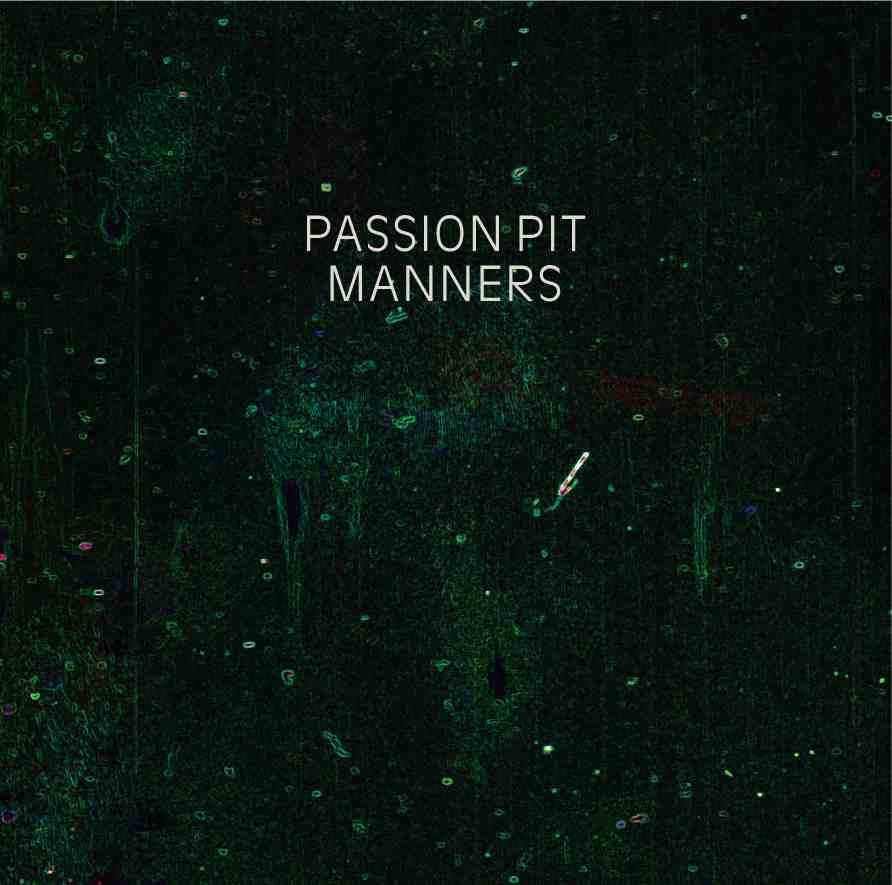
11 Little Secrets Passion Pit Manners 3:59 (their videos are making me like them even better)
12 Zero Yeah Yeah Yeahs It's Blitz! 4:26
13 Glass Bat For Lashes Two Suns 4:33
14 Hell Tegan & Sara Sainthood 3:25 (Amanda Palmer Karaoke Verite)
15 Idiot Heart Sunset Rubdown Dragonslayer 6:09
16 Psychic City YACHT See Mystery Lights 5:09
17 New In Town Little Boots Hands 3:19
18 Summertime Clothes Animal Collective Merriweather Post Pavilion 4:32
19 Daylight Outro Mix Matt & Kim Grand 3:11
20 Moonson Delorean Ayrton Senna EP 3:45


21 M Telefon Tel Aviv Immolate Yourself 3:42
22 Tricky Tricky Röyksopp Junior 5:59
23 The Fear Lily Allen It's Not Me, It's You 3:26
24 Dominos The Big Pink A Brief History Of Love 3:46
25 One Day The Juan MacLean The Future Will Come 4:17
26 Bulletproof La Roux 3:27
27 2012 Gossip Music For Men 3:50
28 Break Up Girls! The Raveonettes In And Out Of Control 4:00
29 The End Vivian Girls Everything Goes Wrong 3:16
30 Hot Song Talk Normal Sugarland 4:06
31 Wet Hair Japandroids Post-Nothing (Promo) 3:12
32 So Bored Wavves Wavvves 3:14
33 The Turn Around The Oh Sees Help 1:03
34 Keep Me In Dark The Fiery Furnaces I'm Going Away 4:04
35 Shelter The xx xx 4:30
36 Stillness Is the Move The Dirty Projectors Bitte Orca 5:14
37 Real Live Flesh Tune-Yards Bird-Brains 3:33


38 People Got a Lotta Nerve Neko Case Middle Cyclone 2:34
39 The Forest Mirah (A)Spera 3:30
40 Avalanches Jordaan Mason And The Horse Museum Divorce Lawyers I Shaved My Head 2:18
41 Hands Like Roots The Builders And The Butchers Salvation Is A Deep Dark Well 2:18
42 See The Leaves The Flaming Lips Embryonic 4:24
43 Easy Thao with the Get Down Stay Down Know Better Learn Faster 3:37
44 Dog Days Are Over Florence And The Machine Lungs 4:16
45 The Wooden Chair Jenny Wilson Hardships! 3:15
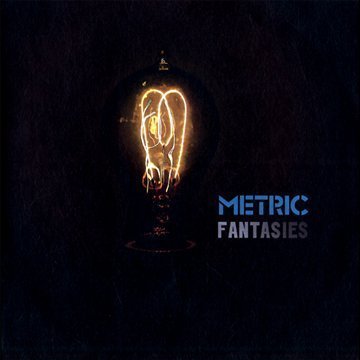
46 Gimme Sympathy Metric Fantasies 3:55
47 Sylvia The Antlers Hospice 5:25
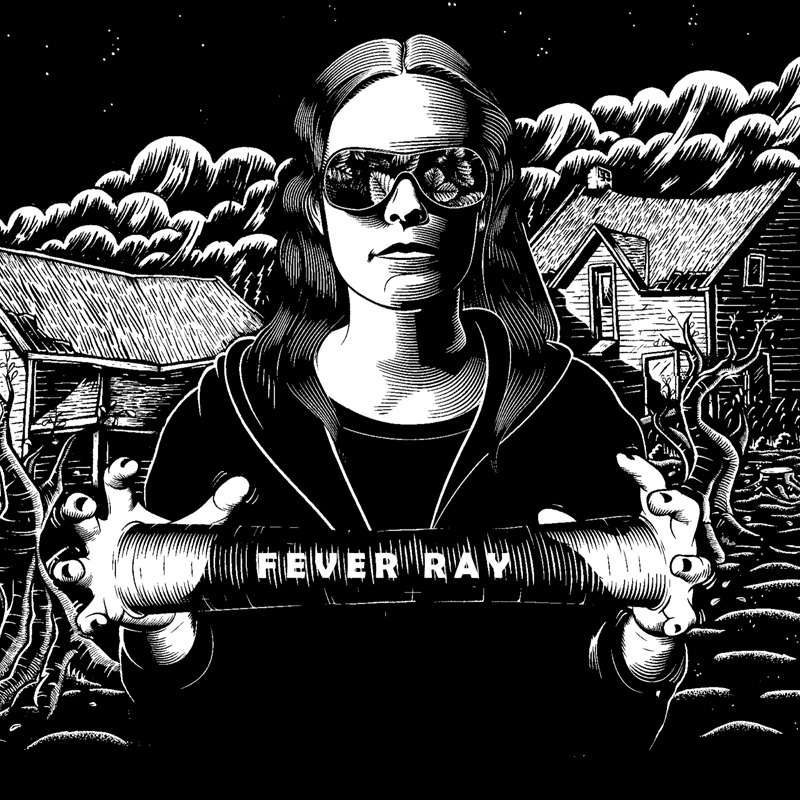
48 Triangle Walks Fever Ray Fever Ray 4:23 (really hard to pick a favorite song. This video looks like her live show.)
49 Bloody Palms Phantogram Eyelid Movies 3:32
50 Fake Out Bear In Heaven Beast Rest Forth Mouth 3:14
51 Trace A Line Au Revoir Simone Still Night, Still Light 3:58
52 On Rose Walk, Insomniac Why? Eskimo Snow 2:08
53 It's All Good Bob Dylan Together Through Life 5:28

Tuesday, December 22, 2009

Janet's Favorite Albums of 2009

Subject to editing and the addition of 10 more albums.

30. The Gossip - Music For Men
29. Phantogram - Eyelid Movies
28. Dragonette - Fixin to Thrill
27. The Raveonettes - In and Out of Control
26. The Oh Sees - Help
25. Jenny Wilson - Hardships!
24. Bear in Heaven - Beast Rest Forth Mouth
23. Thao with the Get Down Stay Down - Know Better Learn Faster
22. The Antlers - Hospice
21. the xx - xx

20. Royksopp - Junior


19. Wild Beasts - Two Dancers


18. tUnE-yArDs - Bird-Brains

a.k.a. Merrill Garber with a ukelele and a laptop.

17. Micachu and the Shapes- Jewellery

Young experimentalists to keep an ear on.

16. Telepathe - Dance Mother
Experimental female electronica duo. Very Brooklyn. Looking forward to their future.

So Fine video
I liked the pink dead rat they had as the cover when it leaked. Ah well.

15. St. Vincent - Actor Out Of Work

Like the other Bush-descendant, a giant leap on the sophomore album. Actor Out Of Work, Marrow.

14. Passion Pit - Manners

All-male dance pop with falsettos and beards. To Kingdom Come! is not the song we thought it was

13. La Roux

Sharp retro-synthpop. If their videos keep improving does that mean their budget's increasing? Of course. In For The Kill, Bulletproof, I'm Not Your Toy.

12. Fiery Furnaces - I'm Going Away

They've taken their own premise in yet another weird direction - less produced, more accessible, and resembling live blues-pop, it's not their strongest, but there's something perfectly deadpan about it. Even in the Rain.

11. Yacht - See Mystery Lights

Listen to these fucking hipsters. Summer Song.


10. Little Boots - Hands

Victoria Heskel is a vulnerably pretty, slightly awkward music nerd who makes energetic catchy spacey electro-dance-pop. She also has a good buzz management system and shares my aesthetic. The album kind of drifts overly cheesy toward the end. New In Town video hobo, gangbanger and whore minstrelry for the times. Other videos try to avoid boots herself dancing. What is a laser harp? It's a harp, made of laser.

9. Vivian Girls - Everything Goes Wrong

I like almost every song. Maybe I'm naive and just like songs about boys by girls and nice simple chords. Maybe I wouldn't like it if it didn't roar with distortion. Maybe I'll be deaf enough to like Times New Viking soon.
Moped Girls I had not seen before. When I'm Gone.

8. The Dirty Projectors - Bitte Orca

Yeah, but who didn't list them this year? Stillness is the Move: llama wanker, wanker llama

7. Sunset Rubdown - Dragonslayer

This band is better than Spencer Krug's other band[s]. Proggy. Ambitious. Fantastical. Fun. And this is the album that makes it better. They don't make videos, but the do play Nightingale/December Song live (with an obscene number of drummers).

6. Bat for Lashes - Two Suns

Huge conceptual and technical leap forward from her debut. She is a worthy Pakistani-British successor to Kate Bush. Daniel, Pearl's Dream (Lynchy!), Sleep Alone.

5. Neko Case - Middle Cyclone

The impression I get of this is that it's one great and one okay EP with a lot of filler, scrambled together. It could lose the covers and the crickets. Then I realized that's still half an hour of better music than anything else ever.
People Got A Lotta Nerve video based on Julie Morstad's drawings. If I listen to this too much I cry. Onward.

4. Fever Ray s/t

(probably the 3rd best album cover, isn't this an odd pattern?)
Truly a grower, and a profoundly lonely album, by Karin Dreijer-Andersson, a.k.a. the female sibling of The Knife. Her increasing influence on that band's sound is evident in the similarity between Fever Ray and Silent Shout. Her and her cohorts are as weird as they want to be, coldly maintaining their performance of electronic shamanism in natural virtuality. When I Grow Up, Seven.

3. Animal Collective - Merriweather Post Pavilion
Natch. Also, second best cover. Shut up, I like crawly op-art.


2. Yeah Yeah Yeahs - It's Blitz!
Also wins "best album cover". Decade-defining art-rock trio does electropop. So some of them might be dicks.

Video for "heads will roll" featuring two of 2009's other memes, a werewolf Michael Jackson.

1. Metric - Fantasies

If you're gonna self-release an album, it's good if it's your best, and there's still plenty of budget, and a whole series of Buenos Aires street art by Hollwood Cambodia for each song. Here's the video for"Gimme Sympathy" in which members of the band switch within, seemingly, the same shot.
Emily Haines is also in this excellent video for "Games For Days" with Julian Plenti / Paul Banks of Interpol.